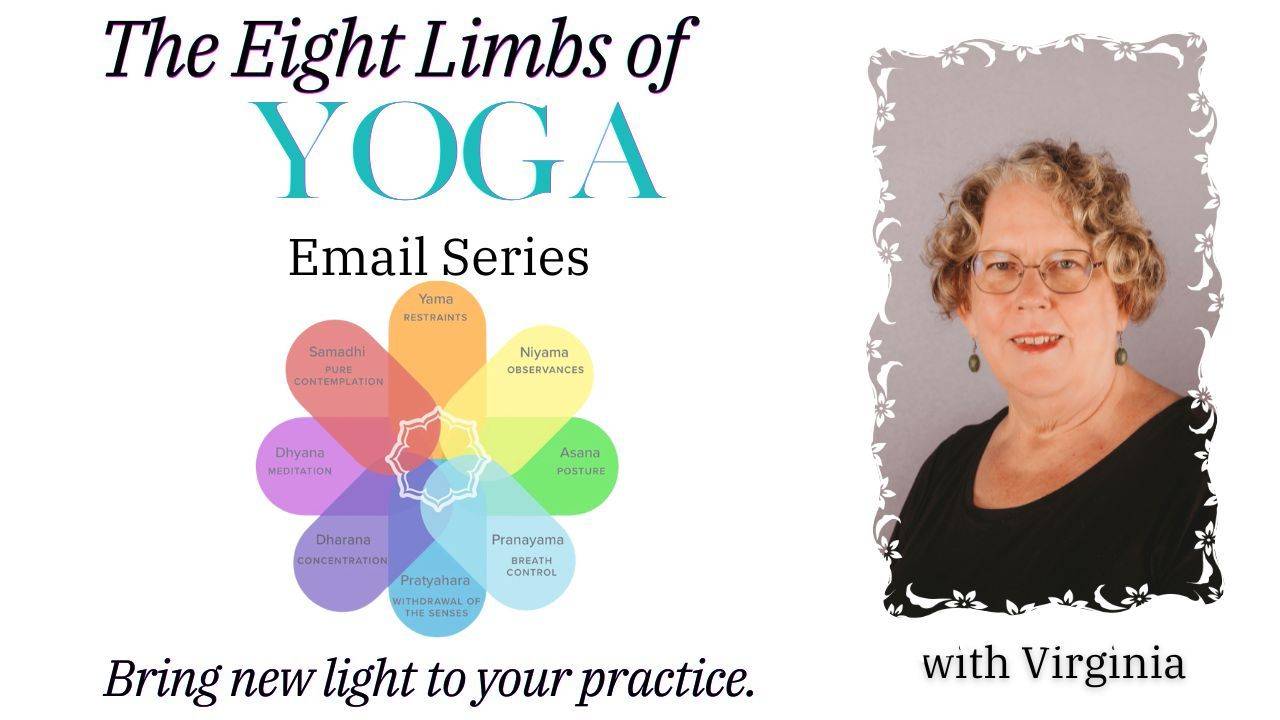
8 Limbs of Yoga - Tapas
Tapas, often translated as fire or discipline, provides the inner spark needed to recognize the challenges in your life and continue showing up anyway. It is easy to mistake discipline for punishment or control rather than an expression of self-love.
Padma often refers to staging as mastery. After witnessing students' reactions to not "doing the whole pose," I believe there is a misunderstanding of what that means. Staging embodies many of the yamas and niyamas we have explored over the past several weeks, beginning with ahimsa, or compassion. It requires practicing satya (truthfulness about where you are today), asteya (not stealing from yourself by reaching beyond your current capacity or withholding your fullest practice), and santosha (contentment with where you are in this moment).
Staging is rooted in awareness of the breath as you move with breath-aligned movement. If your breath becomes held or ragged, or if proper alignment can no longer be maintained, discipline calls you to return to a stage of the pose where both breath and alignment are sustainable. This is not a sign of weakness but an act of wisdom and self-respect.
Having experienced several injuries that required me to practice with staging, I initially felt self-conscious, believing others were watching and judging me. Over time, I learned to stay present in my own practice, to recognize when I was stealing from myself by not practicing to the fullest extent that was available to me, and to let go of how my practice might be perceived by others.
Staging is the practice of being disciplined enough to remain rooted in self-love. Staging is mastery. Staging is discipline.
Warmly,
Shambavi Lasya (Virginia Bassinger)
Black Belt Circle of Rasa Yoga